

Don't Hit Send Yet
A message can arrive instantly and still take weeks to understand. Norman Formisano has built UNSENT around that gap: the difference between exchanging words and recognising what another person is trying to say.
Book a Call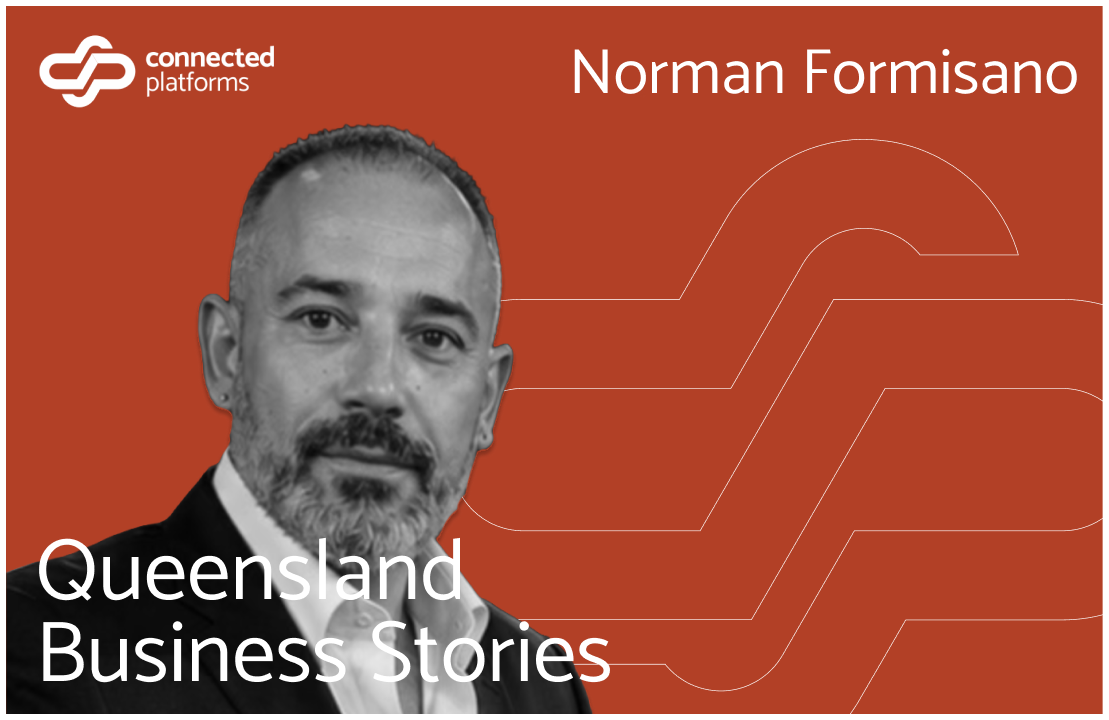
In episode 29 of Queensland Business Stories, the entrepreneur, author and AI founder joins Chris Tipper to discuss communication, responsibility and the value of pausing before a reply. The app began with relationships. The questions it raises are just as relevant to customers, managers and business owners.
Watch the conversation
Prefer audio? Listen to Queensland Business Stories on Spotify.
Make technology support better decisions
Exploring AI in your business starts with the work you want to improve and the information it will use. Book a Call with Connected Platforms, call 07 3062 6932 or contact us to discuss your team's technology needs.
Book a CallFaster messages, familiar misunderstandings
Norman argues that communication technology has advanced faster than our ability to interpret it. Text removes many of the cues available in person. The recipient fills the gaps, sometimes with a meaning the sender never intended.
His example is silence. In one cultural context, staying quiet can be a way of showing respect and preventing an argument from escalating. In another, it can feel like abandonment. Neither interpretation becomes obvious from the message alone. That is one reason UNSENT began with dating and relationships, where different backgrounds meet in emotionally important conversations.
Look at patterns, not just one line
Norman describes an app that lets people upload screenshots or message threads and ask questions about that conversation. The emphasis is on patterns over time, rather than taking one sentence out of context and asking a chatbot what to say next.
Questions can also turn back towards the user. How are my own words landing? Am I contributing to this misunderstanding? Norman sees that shift as central to the product: helping someone notice their behaviour and decide what to do, rather than telling them how to feel.
Privacy is part of the product decision
These conversations can be deeply personal. Norman describes redaction of identifying information and controls that let users delete material, framing privacy as stewardship. He also describes safety guardrails intended to flag harmful behaviour, while explicitly stating that UNSENT is not a counselling service.
Those are the founder's descriptions of the product, not an independent assessment of its privacy controls or effectiveness. For a business considering any AI tool, the underlying question remains practical: what information will it receive, how will that information be handled, and who remains responsible for the decision?
Answer the complaint behind the email
The business applications start with a familiar failure. A customer writes a complaint, someone responds, and the central concern is still not understood. Norman describes work on analysing written complaints and first sales enquiries to better understand what the person needs.
He also recounts an early use of the technology in a production business in Pakistan. Much of its management communication happened through text. Some inappropriate messages had become accepted as normal, and the analysis helped identify stress signals in the organisation. His point is that everyday communication affects culture and performance; it is not separate from them.
Good service is not a humans-versus-AI contest
Norman worries that an automated call can make a customer feel they were not important enough to speak to a person. Chris offers a different experience: sometimes AI understands the problem faster and avoids repeated handovers.
The disagreement is useful because it keeps the discussion grounded in the customer. Fast automation can remove friction. A capable person who understands the situation and resolves it can offer something valuable too. Neither speaker's experience establishes one universal preference for every customer or interaction.
A coach should build capability
Norman returns to responsibility when discussing product design. He says UNSENT is not intended to keep people scrolling or to make them dependent on the app. The goal is to help them communicate more effectively, including during difficult conversations they do not yet feel equipped to navigate.
He describes the 10-to-15-second pause involved in taking a screenshot and uploading it as valuable in its own right. Some users, he says, recognise during that pause that they should not send their planned message. The benefit can come before the analysis: time to move from reacting to reflecting.
Build from Australia, improve one process at a time
Norman is proud of the engineering, marketing and customer-service team he has assembled in Australia. He also discusses the commercial questions founders face when a smaller domestic market means thinking globally from the start.
For owners deciding where AI fits, he suggests looking at processes rather than assuming whole jobs will disappear. The episode's recurring idea is to use technology as a human tool. Better research or faster administration may help, but so can understanding an email before sending the wrong reply.
Connect with Norman and UNSENT
Visit UNSENT to learn about the product and contact the team. Norman welcomes enquiries through the website. The episode also discusses his book and the thinking behind the company.
Start with the work your team needs to do better
If you are exploring AI, data access or more reliable business systems, Book a Call with Connected Platforms, call 07 3062 6932 or contact us. We help Brisbane businesses with managed IT and cybersecurity.
Have a Queensland business story to share? Explore the series and apply to be a guest.
Book a Call