
Built to Last
Ryza Garbacz returned to his family's steel business to help for a couple of months. Two months became six. With the company struggling, he reduced the team to five or six people, bought the business and gave himself five years to make it work.
Book a Call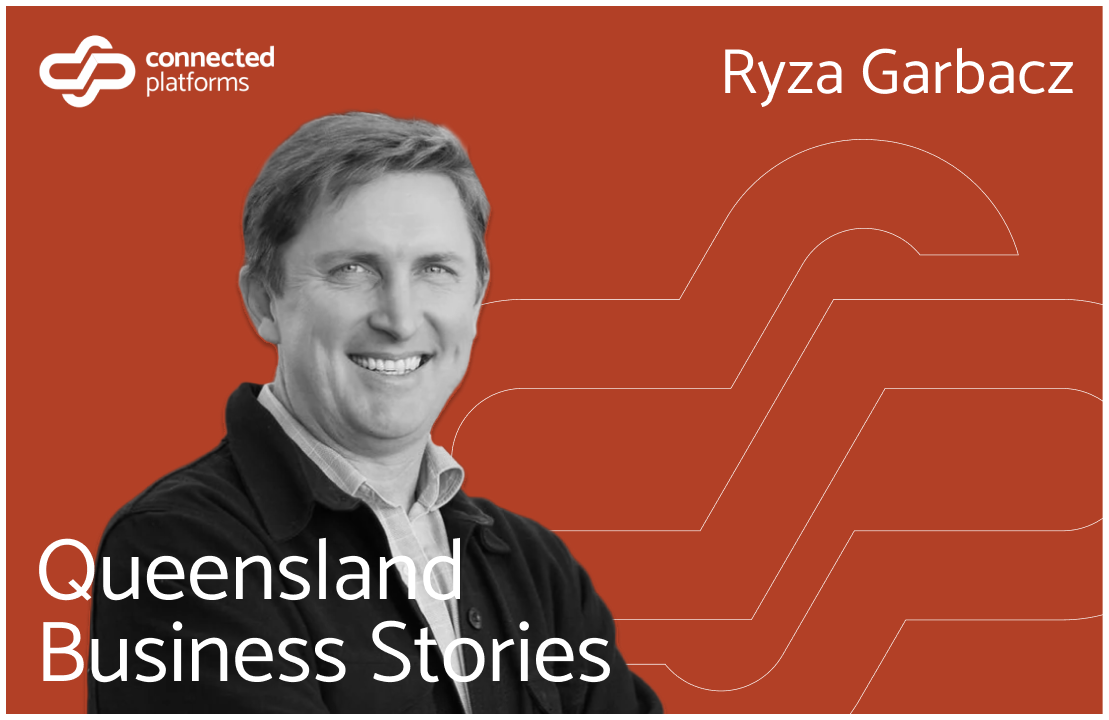
In episode 28 of Queensland Business Stories, the Managing Director of NEACH joins Chris Tipper to discuss rebuilding a Noosaville workshop into a supplier for major Queensland projects. His story connects financial discipline, apprenticeships and technology with a less obvious business decision: choosing a life he wanted to live.
Watch the conversation
Prefer audio? Listen to Queensland Business Stories on Spotify.
Give your next stage a stronger foundation
Growth changes what your team needs from its technology. Connected Platforms helps Brisbane businesses with practical IT and business solutions. Book a Call, call 07 3062 6932 or contact us to talk through your next stage.
Book a CallA temporary return became a different career
Ryza had spent a decade working as a civil engineer on mining and infrastructure projects around Australia. He had a career he enjoyed and expected to return to it. His father's request for help brought him back to a business facing serious cash-flow pressure.
The first response was to simplify. A much smaller team took on small projects while Ryza worked out whether the company could remain viable. When his father offered him the business, Ryza chose to buy it. The Sunshine Coast and the work itself had given him a sense of balance he had been missing.
Build capacity and protect the downside
The factory was only partly built, with an old office and a dirt paddock across part of the site. Ryza bought the operating business first; his parents initially retained the land and buildings. Their shared plan was to expand the factory.
In a depressed local market, the expansion gave the company work, created more production capacity and improved an asset the family could sell if the business did not recover. Ryza later bought the property too. The lesson is not to expand regardless of conditions. It is to understand what a project does for both the operating business and the people carrying its risk.
Scale has to work in the numbers
Ryza argues that a mid-sized business can be easier to run than a very small one, but only when its economics support it. He brought his engineering and project-management habits to the company, treating it as a project that never finishes.
Revenue per employee became one measure of whether the model was sustainable. Larger, longer-running packages offered a different foundation from small local jobs. There were mistakes along the way: projects outside the team's capability produced poor financial outcomes. Knowing the numbers meant recognising those limits, not simply chasing a bigger order book.
Develop the people you cannot readily hire
When the tradespeople NEACH needed were scarce, the company built an apprenticeship pipeline. Training takes years, so it could not be a last-minute response to a large contract. It became part of how the business developed its capability.
Ryza enjoys seeing apprentices and graduate engineers become skilled and independent, whether they stay at NEACH or move elsewhere. He connects manufacturing capability with the people who earn a living, build local facilities and contribute to their communities. In his view, that is part of the business's legacy.
Start AI adoption with the information it will use
Ryza describes taking an AI course and spending about a year testing tools before introducing them more widely to his team. His first concern was the business's information: storage, naming conventions, access and the need to protect client data, especially on defence-related work.
He estimates that his own output is now around four times what it was a year earlier. That is his experience, not a promised return for every business. He tests agents against previous work and still checks their results because errors remain. The practical lesson is to combine experimentation with clear boundaries and someone who understands what good work looks like.
Prepare for the risks inside a busy market
Looking towards 2032, Ryza sees opportunity in South East Queensland's infrastructure programme alongside pressure on labour and delivery capacity. He expects businesses to compete hard for talent and warns that a strong order book does not remove commercial risk.
His response includes talking to direct competitors about collaboration. He calls it Team Queensland: finding ways to deliver through a demanding period without assuming one company can do everything. These are his forward-looking views, not guarantees about future workloads or outcomes.
Build a business that can outlast you
For Ryza, choosing happiness was not separate from the commercial plan. He worked backwards from the life and income he wanted, then tried to build a sustainable business around them. Enjoying the work helps him stay engaged with the people doing it.
He wants the next generation to inherit useful systems and a sound foundation. More personally, he wants to see people in the community who gained their skills and opportunities through NEACH. A lasting business is also what its people can carry beyond it.
Connect with Ryza
Visit NEACH to learn about its steel fabrication work. Ryza welcomes connections on LinkedIn; search for Ryza Garbacz. You can also follow NEACH on LinkedIn.
Is your technology ready for the next stage?
If your team is growing or exploring AI, start with the systems, information and access behind the work. Book a Call with Connected Platforms, call 07 3062 6932 or contact us.
Have a Queensland business story worth sharing? Explore the series and apply to be a guest.
Book a Call