
Most Burnout Isn't Overwork
A growing business and a healthy life do not automatically arrive together. Kateesha Hembrow built StraightUP Collective around the gap she sees between leaders' professional success and their experience at home.
Book a Call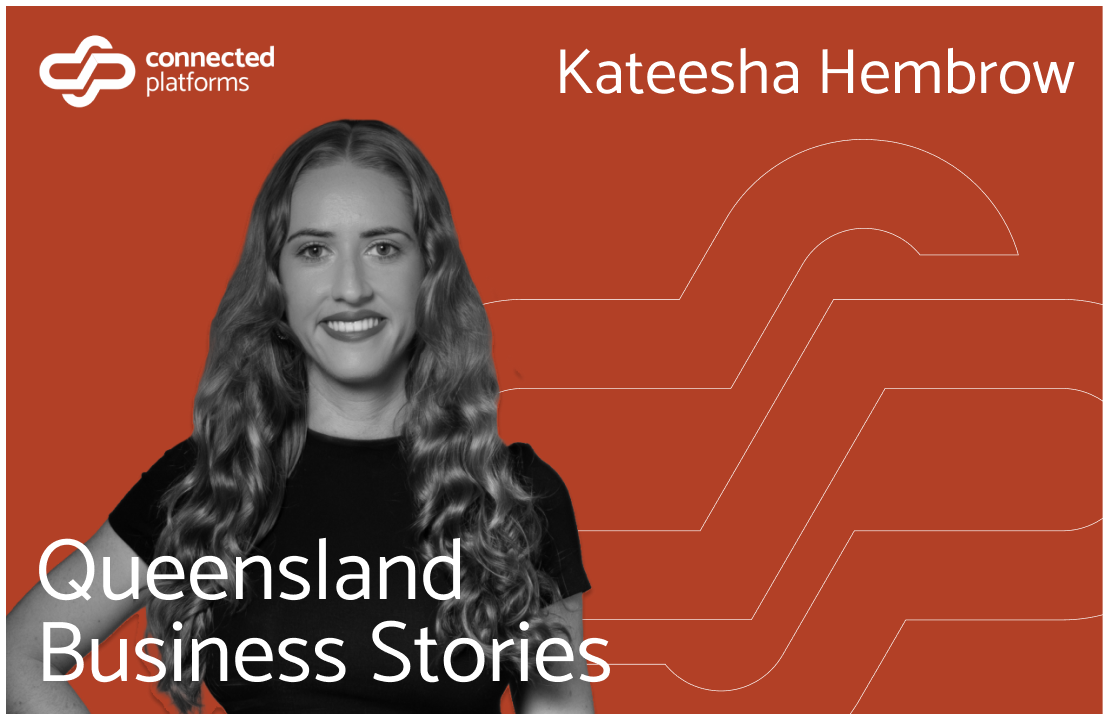
In episode 30 of Queensland Business Stories, the Gold Coast founder joins Chris Tipper for a direct conversation about self-leadership, integrity and uncomfortable decisions. The title captures Kateesha's provocative personal perspective on burnout. The wider discussion is about knowing your values and noticing when your actions no longer match them.
Watch the conversation
Prefer audio? Listen to Queensland Business Stories on Spotify.
Make your business systems support your team
Reliable technology should help people do their work. If your business needs better IT support or clearer cybersecurity priorities, Book a Call with Connected Platforms, call 07 3062 6932 or contact us.
Book a CallLeaving a successful identity behind
Kateesha did not begin as a coach. After university, she worked in a high-pressure mining operations role. She left in January 2020 after becoming unwell, then tried several businesses before building a successful LinkedIn personal-brand agency.
At the time of recording, she describes winding that agency down and having stopped taking new clients in June. The decision was frightening precisely because the business was working. She felt she had something different to offer and chose to put her energy into StraightUP Collective.
She initially wanted to help a broad range of people. The practice developed a strong focus on men leading seven- and eight-figure businesses whose careers looked successful while their personal lives were not where they wanted them to be. She also works with women in leadership.
Visibility means people can see the attempt
Kateesha links the speed of her new business's growth to talking about it publicly. Building quietly might have felt safer, but she believes it would have taken longer. Her existing personal brand helped people discover the new work.
That visibility also attracted criticism. The trade-off was not simply more attention; it was accepting that people could see her take a risk and potentially fail. Her account offers a practical founder question: how much visibility are you willing to accept while a new direction is still taking shape?
A personal perspective on burnout
Kateesha describes a long period of being unwell and what she came to understand about her own patterns. She uses the term secondary gain for a need being met in an unhealthy way. In her personal example, attention and sympathy played a part. She says recognising the need and removing the shame around it helped her find a different outlet through her personal brand.
She also describes asking a client to write down ways she felt she benefited from remaining in burnout. These are Kateesha's experiences and coaching interpretations. They do not establish that burnout has one cause, that people choose to become unwell or that coaching guarantees recovery.
The episode's leadership thread is about being willing to examine your behaviour honestly. It is not a reason to dismiss workload, working conditions or someone's health needs.
Who can tell a leader the uncomfortable truth?
Direct feedback becomes more complicated at the top of a business. An employee may be able to explain a problem with a project. They are unlikely to discuss their boss's marriage or how present they are with their children.
Kateesha describes trust, vulnerability and her own willingness to live the standards she teaches as essential to those conversations. She shares a coaching example in which confronting feedback was welcomed because the client wanted someone to identify patterns others were not naming. It is an account of that relationship, not a formula for confronting every employee or colleague.
Personal values before the office poster
When a client's business is doing well but the person is struggling, Kateesha starts with personal values. These are distinct from the values a business displays for its team. She then helps the client work out personal and business goals around what they genuinely want to prioritise.
Her preferred language is priorities and presence rather than balance. The question is not whether every part of life receives equal time. It is whether people are keeping their commitments and paying attention to what they have decided matters.
When work feels easier than home
Kateesha argues that business can become the place someone retreats to when personal relationships or habits feel more confronting. Doing more work may offer a familiar challenge, even when the business itself is not going well.
In one client example, she describes choosing to focus on home first. Her point is to examine the foundations rather than assuming that fixing the business will automatically fix everything else. The conversation invites owners to notice that possibility without assuming every long working day has the same explanation.
Keep human connection beside the AI conversation
Kateesha sees opportunities in AI's ability to improve productivity and automate work. She also worries that social skills and human connection may not receive the same attention as the technology.
Her concern is a forward-looking one: as tools change quickly, people still need to build relationships, communicate and remain present at home. The episode closes on her emphasis on brave, honest conversations and the example adults set for their children.
Connect with Kateesha
Kateesha's preferred contact channel is LinkedIn. Send a connection request and a message to learn more about her work with StraightUP Collective.
Build technology around the work that matters
For help with managed IT, cybersecurity and the systems your team relies on, Book a Call with Connected Platforms, call 07 3062 6932 or contact us.
Have a Queensland business story to share? Explore the series and apply to be a guest.
Book a Call